
Subtidal reef monitoring
Subtidal reef monitoring sites (in red).
5 months ago from Steffan HoweParks Victoria
Location: Subtidal reef monitoring
Subtidal reef biota – bull kelp. Photo by Mark Rodrigue.
6 months ago from Steffan HoweParks Victoria
Location: Subtidal reef monitoring
Subtidal reef biota – red velvetfish. Photo by AME.
6 months ago from Steffan HoweParks Victoria
Location: Subtidal reef monitoring
Subtidal reef biota – horseshoe leatherjacket. Photo by Don Love.
6 months ago from Steffan HoweParks Victoria
Location: Subtidal reef monitoring
Subtidal reef biota – blacklip abalone.
6 months ago from Steffan HoweParks Victoria
Location: Subtidal reef monitoring
Subtidal reef biota – rock lobster. Photo by Don Love.
6 months ago from Steffan HoweParks Victoria
Location: Subtidal reef monitoring
Subtidal reef surveys. Photo by AME.
6 months ago from Steffan HoweParks Victoria
Location: Subtidal reef monitoring
Algal surveys. Photo by AME.
6 months ago from Steffan HoweParks Victoria
Location: Subtidal reef monitoring
Subtidal reef monitoring
8 months ago from Claire HarveyParks Victoria
Location: Subtidal reef monitoring
The shallow subtidal reef monitoring program (SRMP) was established in 1998 at Wilsons Promontory before the declaration of the marine national parks system. In 1999 the it was expanded to include the marine environments where Bunurong and Port Phillip Heads Marine National Parks are now located. With the establishment of marine national parks and sanctuaries in 2002 the program was further expanded to include Merri, Marengo, Eagle Rock, Point Cooke, Jawbone, Ricketts Point and Beware Reef Marine Sanctuaries, and Point Addis, Point Hicks and Cape Howe Marine National Parks.
The SRMP was implemented to provide information on the status of natural assets and threatening processes, and to determine the nature and magnitude of trends through time. The results of the program will allow assessment of the condition of the park and will influence management priorities and responses.
Methods Summary
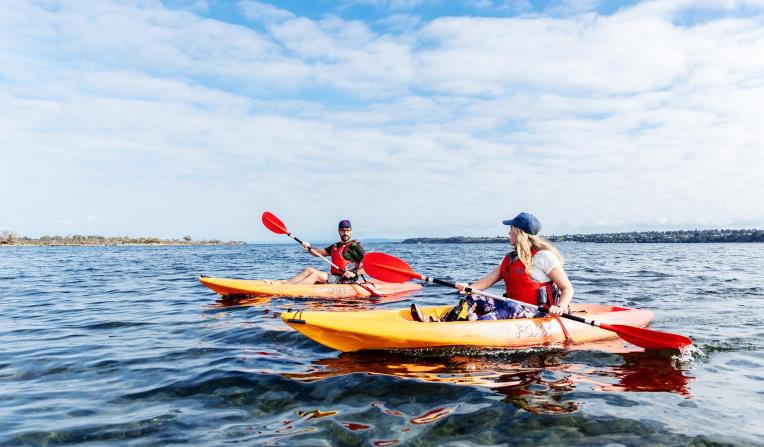
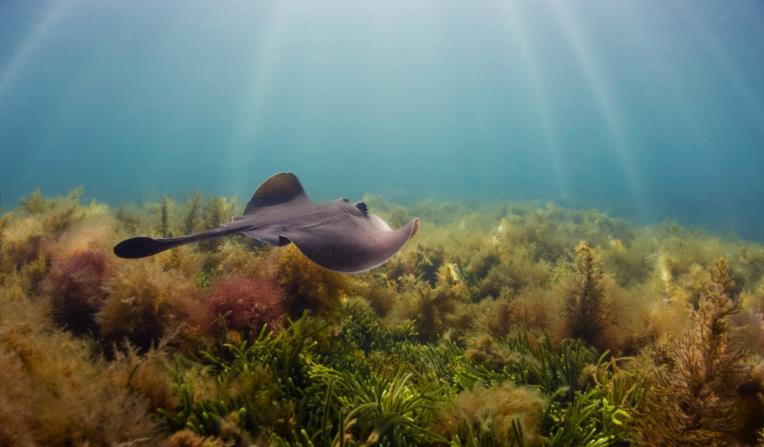
The SRMP involves standardised underwater diver-mediated visual survey methods of macroalgae, invertebrates and fish, generally at a depth of less than 10m (Edmunds and Hart 2003).
The SRMP monitors a specific suite of flora and fauna associated with reefs in shallow waters and is not designed to assess non-reef associated biota in shallow waters nor is it designed to assess the suite of species found in deeper water. Sites will now be monitored according to a revised monitoring schedule.
Current Results
The data collected since commencement of this program has provided essential baseline information on biodiversity both within and outside of MPAs. A preliminary analysis of the data collected prior to 2007 was conducted by the University of Melbourne. This analysis compared sites within MPAs with similar sites (reference sites) outside MPAs both pre- and post-declaration.
Generally there were few differences in species size and abundance between MPAs and reference sites and only a few species showed increases in the MPAs (see also Marine Natural Values reports for details ). This result was no surprise as previous national and international studies have highlighted that it can take well over a decade after declaration before changes in species size and abundance in MPAs can be detected. Interestingly other studies have also found that some subtidal reef species actually decrease in size and/or abundance because of complex species interactions.
More recent analysis has detected other useful information. At Pope’s Eye, which has a longer period of protection as a Fisheries reserve from the late 1970s, an apparent increase in fish size and abundance has been detected. Furthermore, the program has also identified threats to natural assets such as illegal harvesting of abalone in Bunurong and Cape Howe MNPs, marine pest incursions in MPAs and the dieback of a key habitat-forming seaweed in Port Phillip Heads MNP. Threat detection is an essential activity so that Parks Victoria can implement management actions to reduce the impact of these threats.
A targeted analysis of monitoring data in relation to conservation outcomes for each marine national park and sanctuary will be carried out by 2013 (see Future Monitoring Directions).
Barriers shore up the future of the rare Shaw Galaxias
09 May 2013
A partnership between Government agencies, volunteers and scientists has installed barriers to save a rare alpine fish that was in danger of extinction. Parks Victoria, the Department of Environment and Primary Industries (DEPI) Arthur Rylah Institute (ARI), West Gippsland Catchment Management Authority (WGCMA), VRfish and the Australian Trout Foundation …
Latest posts
Check out the free App from Friends of Barwon Bluff. View post | Tue, 18 Jun 2013 11.49
After heavy rainfall, the falls are thundering over the rocks and throwing spray...View post | Mon, 17 Jun 2013 10.10
Thanks to David Flagg, Ranger at You Yangs Regional Park, for sharing his pictur...View post | Sun, 16 Jun 2013 18.07
Kanowna Island, Wilsons Promontory National Park is home to one of the four larg...View post | Fri, 14 Jun 2013 14.38
Park rangers have been busy spreading important public safety information to vis...View post | Wed, 12 Jun 2013 16.08