

You are here

Home > Park management > Environment > Weeds and pests > Marine pests

Marine pests

The European fan worm

1 year ago from Unknown LDAP UserParks Victoria

Location: Marine pests

Japanese Kelp

1 year ago from Unknown LDAP UserParks Victoria

Location: Marine pests

Steve Tuohy with invasive seaweed and seastar

1 year ago from Unknown LDAP UserParks Victoria

Location: Marine pests

Northern Pacific Seastar

1 year ago from Unknown LDAP UserParks Victoria

Location: Marine pests

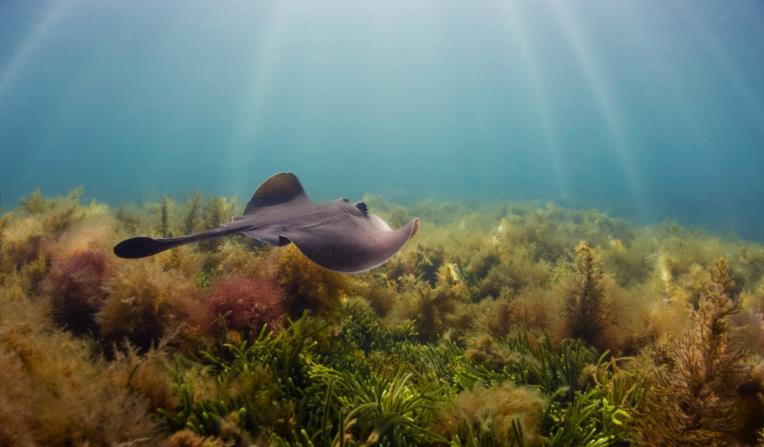
Marine pests are non-native plants or animals which can have a detrimental impact on native marine ecosystems. They are introduced into Australian waters via human activities such as shipping. Not all introduced species will become a pest as they need to be able to establish themselves in the new environment. Many established introduced species have the ability to produce huge numbers of spores or offspring which allows them to spread and increase population sizes quickly.

Both plant and animal marine pests are undesirable because they can have a big impact on marine ecosystems and human activities. They can disrupt food chains, endanger native marine life and alter ecosystem processes. There can also be direct effects on human lifestyle such as illness and damage to marine economic benefits gained from aquaculture and fishing. They can make the environment less attractive, making activities such as diving and snorkelling less enjoyable.

Marine pests come in all shapes and sizes. Over 250 are known to have been introduced to Australian waters with over 100 species introduced to Port Phillip Bay.

Report any sighting of marine pests to the Department of Environment and Primary Industries on 136 186.

Northern Pacific seastar

The Northern Pacific seastar, Asterias amurensis, is mostly yellow in colour, with varying amounts of purple on the arms. The five arms taper and curl upwards at the ends, unlike native seastar species. This characteristic is useful for distinguishing the Northern Pacific seastar from native species such as the zigzag star and eleven-armed seastar.

The first confirmed sighting of the Northern Pacific seastar in Port Phillip bay was in August 1995. It is thought that was introduced to Tasmania through ballast water from Japan and subsequently introduced into Port Phillip Bay from Tasmania. The Port Phillip Bay infestation is unfortunately well established and has negative impacts on native species and marine industries. Measures to stop the spread of the seastar to other areas in Victoria are in place. For more information see the Department of Environment and Primary Industries website.

European Fan Worm

The European fan worm, Sabella spallanzanii, is a filter feeding tube worm which can grow up to 40cm long. The feeding fan is composed of two layers of feeding tentacles, one of which is spiraled. These tentacles can range in colour from uniform white to striped orange, purple and white.

The first recording of the European fan worm in Australia was in 1965 in Western Australia. By mid-1980’s it had reached Port Phillip Bay and it is now very common, especially on pier piles. This worm has the potential to alter ecosystem processes and compete with native species for food and space. It is also a problem for the aquaculture industry as it is a nuisance fouler.

Japanese Kelp

Japanese Kelp, Undaria pinnatifida, is a seaweed native to the Japan Sea and is found along the coasts of Japan, Korea and parts of China. It is a golden brown seaweed which can grow to anywhere between 0.5m to 3m long. Most disconcerting is the speed at which the kelp grows; it has the capacity to overgrow and exclude native seaweeds.

The seaweed was first discovered in Australia off the east coast of Tasmania in 1988, however evidence suggests it was likely to have been present in Tasmania since 1982. Since this time, the kelp has become established within Port Phillip Bay and, more recently has been discovered in Apollo Bay. Once it has become established it is hard to eradicate, however removal efforts in Apollo Bay have been promising.

Further Information

Department of Environment and Primary Industries
Museum Victoria
Marine Pests

Click to view the news RSS feed.

Parks Victoria says 'thanks a million' to our volunteers at Ricketts Point Marine Sanctuary

10 May 2013

Parks Victoria is saying a special thank you to its many volunteer groups across the state as part of National Volunteer Week, which runs from 13-19 May 2013. At Ricketts Point Marine Sanctuary the Marine Care Ricketts Point (MCRP) friends group works hard to help protect and preserve the natural environment …

View all latest news

What's on

Click to view RSS Feed

Botanical Drawing and Painting Art classes

11 May 2013 10:00am - 8 Jun 2013 2:30pm

This course is an intensive introduction to Botanical Drawing and Painting. Develop observation skills and learn about tonal values, pencil and ink rendering, composition, colour, watercolour and gouache' Explore, develop and understand a variety of techniques to create your own detailed botanical studies. Time: Saturdays 11 May to 8 June, 5 x 4.5 hours = 20 …

Click to view RSS Feed

Monthly Flying Fox Count

22 May 2013 5:15pm-6:15pm

The bat count is held once a month at dusk when the whole colony of 10,000 -20,000 bats fly out to feed around Melbourne’s suburbs. New counters are very welcome and much appreciated. Experience is not necessary as training is provided on the night. Wear comfortable shoes for walking, dress …

Click to view RSS Feed

Friends of Glen Nayook Working Bee

26 May 2013 9:00am-11:00am

Join the Friends of Glen Nayook for a working bee. Morning tea provided.

Click to view RSS Feed

Botanical Drawing and Painting Art classes (advanced)

26 May 2013 10:00am - 23 Jun 2013 2:30pm

This course is an Advanced course for Botanical Drawing and Painting. Develop observation skills and learn about tonal values, pencil and ink rendering, composition, colour, watercolour and gouache' Explore, develop and understand a variety of techniques to create your own detailed botanical studies. Time: Sundays 26 May - 23 June, 5 x 4.5 hours = 20 …